Are home humanoid robots a privacy risk?
A home humanoid puts cameras and microphones in every room it can reach, and some early models let a company employee drive it remotely. Here is what is known.
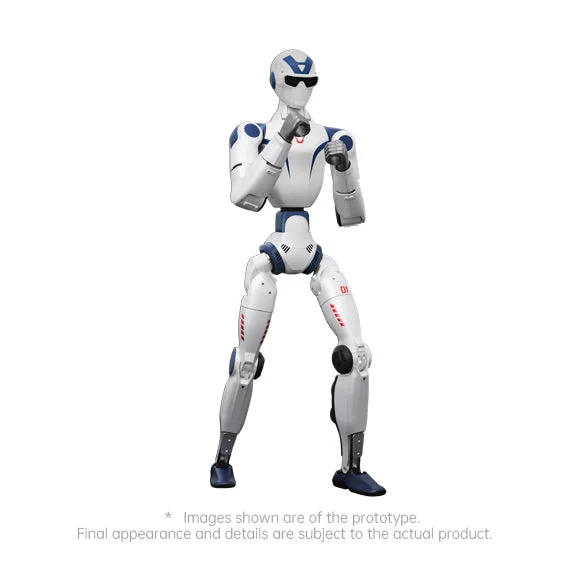
Yes, a home humanoid is a real privacy risk, because it is a camera and microphone on legs that moves through your house, and some early models are designed so that a company employee can see through it and drive it. That risk is not hidden. It is part of the product. The question is what controls you get and whether you can verify them.
Three separate privacy problems
- Live viewing by a remote operator. A person watches through the robot’s cameras to complete a task it cannot do.
- Recorded data used for training. Video, audio and operator sessions can become training examples.
- Security. A robot connected to the internet can be hacked or misconfigured, whoever made it.
1X NEO: the most documented case
NEO arrives with limited autonomy and a fallback called Expert Mode. For a chore NEO does not know, you schedule a 1X Expert to supervise it remotely. 1X’s order page describes it as experts helping NEO learn at scheduled times. In the Wall Street Journal’s 2025 test, the robot was largely driven by a person in a VR headset. Road to VR reports that operators use a Quest 3 headset and that users can configure a list of harder tasks for them.
What 1X says protects you:
- Scheduled sessions. Owners decide when remote access is possible.
- No-go zones. NEO can be limited from entering parts of the home.
- Face blurring. The Robot Report says owners can opt to blur the faces of people the robot interacts with. Road to VR said NEO can potentially blur humans, and did not confirm it as a shipping feature.
- A light signal. Startup Fortune reports that a light ring is supposed to glow when a human has taken control.
Road to VR describes 1X’s approach to privacy as a sliding scale: “The more data you give up, the better Neo can work.” CEO Bernt Børnich has said that buyers accept a social contract (“if you buy this product, it is because you’re okay with that social contract”) and that “If we don’t have your data, we can’t make the product better.”
What we could not verify: the order page lists FAQ questions such as “Do I need to share my data for NEO to work?” and “How will 1X use my data?”, but when we read it the answers were not shown. We could not open 1X’s full privacy policy. That is the document to read before you reserve.
Outside voices are skeptical. AI researcher Gary Marcus said, “The privacy concerns will be huge.” The OECD’s AI incidents monitor listed NEO as an AI Hazard in an October 2025 entry, meaning harm could plausibly occur but none had been reported. It described the concern as cameras, microphones and remote teleoperation letting outsiders view private home life and collect sensitive data.
Figure: training data from homes
In its launch interview with TIME, Figure CEO Brett Adcock said the company plans to use data from home robots for training and will detect, blur and replace personal information in that data. He also said Figure tracks about 15 safety areas, including cybersecurity. Figure has not published a policy for its home product, because there is no consumer product yet. See Figure 03.
Sunday and Weave
Sunday says Memo is autonomous and does not learn through human teleoperation in your home. It trains on data from volunteers who wear a glove in their own homes. Sunday describes Memo as “uniquely engineered with strict standards for safety and privacy” but gives no specifics. Weave says Isaac 1 runs mostly on its own and will use teleoperation “when needed”; The Gadgeteer’s article did not describe its data practices.
Security and the FCC
The FCC’s July 28, 2026 action adding foreign-produced robots to its Covered List rests on a National Security Determination. According to law firm K&L Gates, that document cites security incidents, including an early-2026 vulnerability that let remote actors access thousands of consumer robots in homes, with live camera feeds and audio exposed. The listing is based on where a robot is produced, not on any specific brand. Security risk is not limited to foreign robots, and a US-made robot is not automatically safer. Read can you buy a humanoid robot today for how the rule affects imports.
A checklist before you buy
- Who can watch? Ask whether employees or contractors can view live video, where they are located and how they are vetted.
- What is stored? Ask whether video and audio leave your house, for how long, and whether they train AI models.
- Can you say no? Ask whether the robot works without sharing data, and what is lost if you opt out.
- Can you delete? Ask for deletion rights and what happens to your data when you cancel.
- Can you control access? Look for per-session approval, an indicator light and a hard off switch.
- What is off limits? Bedrooms, bathrooms and children’s rooms are the obvious no-go zones.
- Where does it connect? Putting a robot on a separate guest or IoT Wi-Fi network limits what it can reach. That is general home-network advice, not a maker requirement.
What to do today
If you reserve a NEO, the $200 deposit is refundable, so read the privacy policy and terms before delivery. If children live in the house, also read are humanoid robots safe around kids and pets, because a remote operator and a child in the same room is a combination to think through. For the other ways a robot can be supervised, see 1X NEO.
Common questions
Can someone watch me through a home humanoid robot?
With 1X NEO, yes in principle: a remote 1X Expert can see through the robot’s cameras during scheduled Expert Mode sessions. 1X says owners schedule and permit these sessions and can set no-go zones.
Does the 1X NEO record video of my home?
1X has not published an answer we could verify. Its CEO says shared data improves the robot, and Dezeen reports that first owners will help train its AI. Read 1X’s privacy policy and FAQ before delivery.
Is there a humanoid robot with no remote operator?
Sunday says Memo is autonomous and not teleoperated in your home, and Xpeng says IRON works without remote operation. Both are company claims and neither robot is on sale. Unitree lists no remote-operator service for its robots.
Can a home robot be hacked?
Any internet-connected robot can be. The FCC’s July 2026 action cites an early-2026 vulnerability that exposed camera and audio from thousands of consumer robots in homes, according to K&L Gates.
How do I protect my privacy with a home robot?
Set no-go zones for bedrooms and bathrooms, approve remote sessions yourself, keep it on a separate Wi-Fi network, ask in writing how video is stored and deleted, and use a hard off switch when guests are over.
Sources
- 1X NEO order page (FAQ questions, Expert Mode)
- 1X NEO product page
- Road to VR: NEO uses remote VR operators (Oct 30, 2025)
- The Robot Report: 1X announces NEO pre-orders
- Dezeen: inside the company building America's first mail-order servant robot (Apr 23, 2026)
- Startup Fortune: 1X starts delivering its $20,000 Neo (Oct 22, 2026)
- OECD AI Incidents Monitor: privacy risks as 1X launches NEO
- TIME: Figure 03 is the robot in your kitchen (Oct 9, 2025)
- Sunday Robotics: Memo
- Sunday Robotics: beta program
- The Gadgeteer: Weave Isaac 1 (Jul 31, 2026)
- K&L Gates: FCC adds foreign-produced advanced robotic devices to the Covered List
- CnEVPost: Xpeng opens Iron humanoid robot production line