What can a home humanoid robot actually do?
Tidying, fetching and loading a dishwasher have been shown. Doing them reliably in your house, on their own, has not. Here is the evidence, robot by robot.
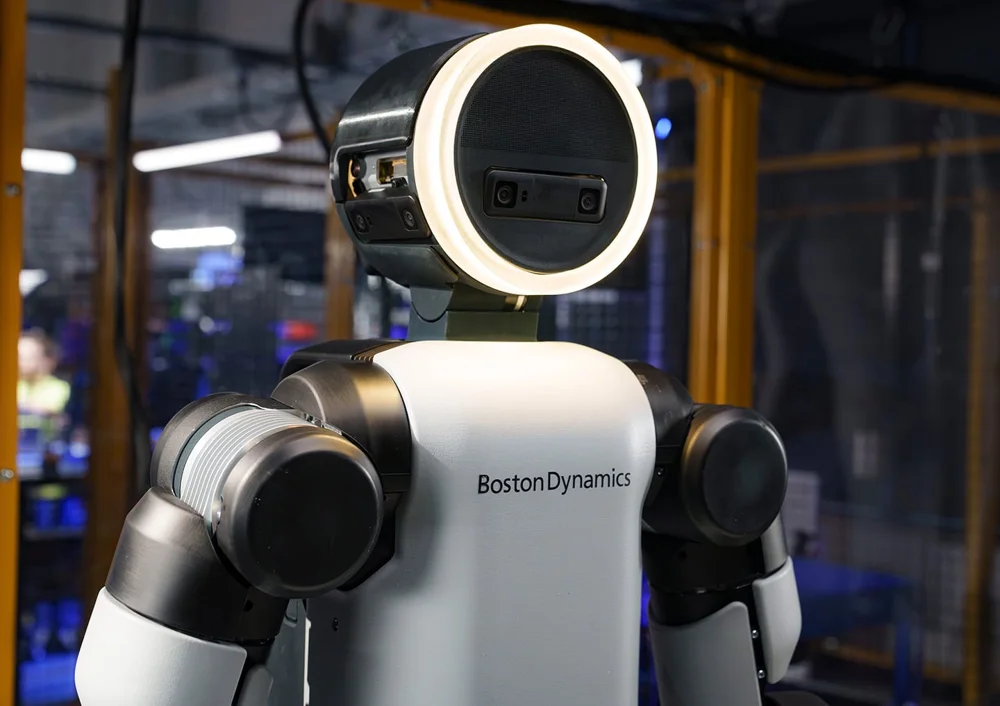
Today a home humanoid can walk around a house, fetch a drink, vacuum with a regular vacuum cleaner, tidy a living room and load a dishwasher, but almost all of that has been shown in demos or with a remote human at the controls. No independent owner reports of a delivered home humanoid doing chores on its own were available as of November 1, 2026. Treat every “it can do your laundry” claim as a goal until a robot proves it in a stranger’s house.
How to read the evidence
Not all “shown” claims are equal. In rough order from weakest to strongest:
- A maker’s video. Figure says its Helix 02 videos are fully autonomous. No success rates are given for individual demos.
- A maker’s blind test. Figure’s Helix 2.5 post reports results from 30 unseen homes, which is more informative.
- A journalist’s test. The Wall Street Journal’s 2025 hands-on with NEO is the best-known one, and the robot was operated remotely.
- An owner’s report. None had been published for a delivered home humanoid.
1X NEO: chores with a human behind it
1X says NEO automates household chores on a schedule you set and arrives with basic autonomy that grows over time. For chores it does not know, you can schedule a 1X Expert to guide it. Press reports of the Wall Street Journal’s test describe NEO vacuuming well and fetching a water bottle from a fridge, and it was shown loading a dishwasher. Notebookcheck notes that the unit tested was a predecessor to the 2026 model. According to Notebookcheck, retrieving the bottle took 1 minute 7 seconds, opening the fridge door was the main challenge, and the robot failed to crack a walnut by hand. A report on an early hands-on test said NEO could not complete a single household task without a human controlling it remotely. CEO Bernt Børnich has said NEO cannot pick up overly heavy, hot or sharp things.
That is the honest baseline for the product with an order page: a mobile body that a remote person can drive, and software that is expected to learn from those sessions. Read 1X NEO for specs and the privacy guide for what the remote part means.
Figure: the strongest autonomy claims, not yet in homes
Figure’s own posts show the most ambitious tasks. In January 2026 a robot unloaded and reloaded a dishwasher in a four-minute run with no resets, then stacked items in cabinets. In March it tidied a living room: spraying and wiping a surface, scooping toys into a bin, tossing a pillow onto a couch and turning off a TV with a remote. In May two robots reset a bedroom, including making the bed with a shared comforter, in under two minutes.
The number that matters came on September 17, 2026. Across 30 Bay Area homes the robot had never seen, three behaviors (tidying living rooms, folding towels, making beds) succeeded 56% of the time on full tasks, up from 9% without Figure’s Index pretraining. Humanoids Daily counted 237 successes in 420 trials. Figure’s CEO said the result had not reached his goal of long-horizon autonomous work in a home. See Figure 03.
Sunday and Weave: chore-first robots that are not humanoids
Sunday’s Memo rolls on a wheeled base and is trained on data from volunteers who wear a glove. Sunday lists collecting and loading dishes (a 33-step table-to-dishwasher sequence), pulling an espresso shot and folding socks, and says it is still making those skills reliable in any home. It will not be for sale until its beta ends. Weave’s Isaac 1, also wheeled, targets laundry flow (collect, fold, put away) and a daily reset (making beds, straightening pillows, tidying clutter). It takes pre-orders at $7,999 with first California shipments planned for fall 2026, and uses remote assistance when needed, according to The Gadgeteer. Neither has independent delivery reports yet. See Sunday Memo.
Cheap humanoids: dancing, not dishes
Unitree’s R1 ($4,900 and up) and G1 ($13,500) are hobby, education and research robots. Unitree claims no household chores, the R1 and standard G1 have no dexterous hands, and the G1’s arm payload is about 2 kg. Battery life is about one hour on the R1 and two hours on the G1. They teach robotics well. They do not unload dishwashers. See Unitree R1 and Unitree G1.
Tesla and the rest: no home demos
Tesla has shown no home product. In October 2026 Musk called the hand the main problem, saying fingers must be gentle with delicate objects and survive constant wear, and said the AI still needs work. Xpeng, Fourier and AgiBot have announced companion, interaction or commercial roles, not chores. See when Tesla Optimus will be for sale.
The limits that keep showing up
| Limit | Evidence |
|---|---|
| Speed | Sunday says Memo moves at about half a human’s pace for most tasks. NEO took over a minute to fetch a water bottle. |
| Battery | NEO about 4 hours; Unitree R1 about 1 hour; G1 about 2 hours; Fourier GR-3 about 3 hours. |
| Strength | NEO will not lift heavy, hot or sharp objects. G1 arm payload is about 2 kg. |
| Hands | Musk names the hand as Tesla’s main problem. Most cheap humanoids have no dexterous hand. |
| Stairs | Sunday’s Memo cannot climb stairs. |
| Reliability | Figure’s best published home result is 56% full-task success. |
| Supervision | NEO and Isaac 1 can use remote operators. |
How to judge a claim
When a maker says its robot can do a chore, ask four things. Is the video unedited and continuous, and how long is it? What was the success rate over many tries, and in how many different homes? Was a person controlling the robot at any point? Was the robot running software that customers will get? Figure’s Helix 2.5 post answers some of these (30 homes, a success rate, no fine-tuning). Most others answer none.
What to expect in the first year
Expect a robot that does a few things slowly, needs your help or a remote person’s help for the rest, and gets better through updates. The right comparison is a very slow, very expensive assistant, not a replacement for you. If your problem is floors, a robot vacuum already solves it. If your problem is dishes and laundry, the honest answer is to wait for owner reports. The buying guide shows what is orderable now.
Common questions
Can a humanoid robot do household chores?
In demos, yes: Figure has shown dishwasher loading, tidying and bed making, and press tests of 1X NEO showed vacuuming and fetching a drink. Those were company videos or tests with a remote human in control. No independent reports of a delivered robot doing chores unaided had been published as of November 1, 2026.
Can a humanoid robot do laundry or dishes?
Figure reports folding towels and loading a dishwasher in demos and tests, with 56% full-task success in 30 unseen homes. Sunday’s Memo and Weave’s Isaac 1 target dishes and laundry but are pre-launch.
Does the 1X NEO work on its own?
Partly. 1X says it arrives with basic autonomy that grows over time and uses scheduled 1X Experts for chores it does not know. An early hands-on test found it could not finish a single household task without a human controlling it remotely.
How long does a home humanoid battery last?
1X lists about 4 hours for NEO. Unitree lists about 1 hour for the R1 and about 2 hours for the G1. Fourier lists about 3 hours for the GR-3.
Sources
- 1X NEO product page (specs, Expert Mode)
- Notebookcheck: the WSJ's NEO test, vacuuming but no walnut
- Startup Fortune: 1X starts delivering its $20,000 Neo (Oct 22, 2026)
- Road to VR: NEO uses remote VR operators to help with chores
- Figure: Introducing Helix 02
- Figure: Helix 02 Living Room Tidy
- Figure: Helix-02 Bedroom Tidy
- Figure: Helix 2.5, Zero-Shot 30-Home Generalization
- Humanoids Daily: Adcock on Figure 04 (Sep 18, 2026)
- Sunday Robotics: Memo
- Humanoids Daily: Sunday unveils Memo
- The Gadgeteer: Weave Isaac 1 (Jul 31, 2026)
- Unitree G1 product page
- Unitree R1 product page
- Electrek: Tesla pushes Optimus deliveries to late 2027